Musk is to ZEV Credits What Fukushima was to Nuclear
ZEV mandates helped accelerate electric transportation, but the associated credits did so with the worst of negative externalities.

They’re how he blew up big enough to harm us all
With Canada’s new automotive policy announced Feb 5, zero emission vehicle (ZEV) mandates are dead. And with them, ZEV credits.
ZEV purchase rebates will be reinstated, tapering off over time, and tightening emissions standards will instead used to reduce passenger vehicle greenhouse gas pollution. Europe has used this approach. It coaxes automakers towards zero emission options but leaves them flexibility on how to meet interim requirements.
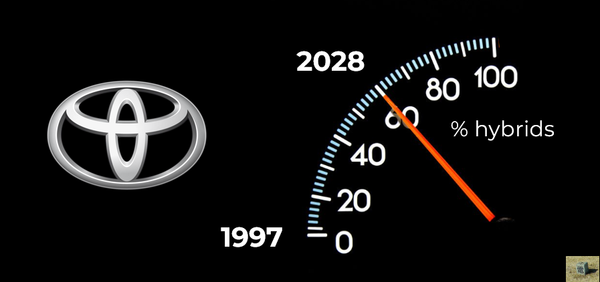
Toyota – the world’s biggest auto producer, and Canada’s as well – hit the European target by doubling down on its gasoline hybrid technology. In 2025, less than 11 percent of its sales in Europe were ZEVs. Only 4.5 percent were battery electric (BEVs). Merely 6.3 percent were plug-in hybrids (PHEVs).
Toyota still met European requirements because two-thirds of its sales – 66 percent – were gasoline hybrids (HEVs). It cut its own path to meet targets, and probably achieved them using fewer critical materials than competitors who leapt straight to BEVs.
But this isn’t an article about Toyota. It’s about Tesla.
ZEV Credits' Very Negative Externality
ZEV mandates helped accelerate electric transportation, but the associated credits did so with the worst of negative externalities.
ZEV credits are how a white nationalist, far right-funding, Great Replacement-spouting, Jeffrey Epstein-confiding, CSAM app-distributing white South African Apartheid princeling made himself the richest man in the world, getting too many cheers from too many liberals/ progressives for too many years along the way.
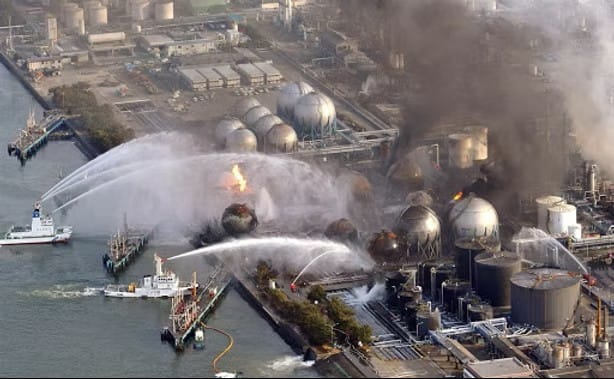
That can’t be set aside. The negative outcome was too big. It overshadows everything else completely. No one cares that for decades the Fukushima nuclear plant ran smoothly with zero emissions. All people remember about Fukushima was the disaster and aftermath.
Fifty years from now ZEV credits will be remembered less for kick-starting zero emission transportation and more for being how the cancer of Elon Musk metastasized across western society; and why we have to ensure gaming on that scale can never happen again.
This is admittedly an unfair comparison. One person died from radiation exposure from the Fukushima meltdown, with perhaps 2,500 passing away due to evacuations and the aftermath, generally the infirm and elderly. Musk’s unfounded promises about Tesla’s “Autopilot” are associated with 60+ deaths, and the aftermath of his destroying US AID is estimated to have caused 762,000 deaths by January 2026.
One legacy of Fukushima is an exclusion zone poisoned with isotopes which will only slowly decay. Musk has poisoned his social media platform, and by extension the public discourse, and it will take years or decades to re-marginalize the bigots he has bankrolled and the hate he has offered prominence. Catastrophes like these are why collective memory exists.
Find these insights thought provoking? Sign up and receive more!
Yes, A Cancer
It is a severe thing to compare a person to cancer. The comparison remains deliberate. Musk has metastasized himself across American society, embedding himself as a government contractor with interests in electric cars, space flight, tunnel-making, social media, emerging medicine, artificial intelligence and whatever next technology he thinks he can hype for billions of dollars of investment.
Further, cancerous cells avoid detection by the immune system by mimicking the nature and appearance of healthy cells. There is no better parallel for how Musk won over too many politically liberal white collar white men. He presented himself as one of the “good guys”, like them. Many bought in and evangelized. As the warning signs mounted, they chose the warm glow of fellowship over the cold truth of evidence.
And the evidence accumulated early. Eleven years ago Musk’s cousins’ solar panel installation company SolarCity – for which he served as Chair of the Board – pushed customers into financially abusive 30-year repayment plans, after which those customers might still owe SolarCity money.[1] It’s one of a thousand points of darkness dotting Musk’s business empire across time.
The writer of the linked-to post, a fan and stockholder, is unhappy to share this fact. He makes pains to reassure readers that he’s still on Team Elon – the warm glow of fellowship – and believes SolarCity “has good intentions”, among them “trying to make sure it stays alive for the long term”.
He makes the moral choice that it’s acceptable to exploit the naïve for Musk’s business’s survival. And he is one of the naïve whom Musk exploits with vapourware self-driving car promises – and later customer deposits – in 2013, 2014, 2015, 2016, 2017, 2018, 2019, 2020, 2021, 2022, 2023 and so forth, for Tesla’s business’s survival.[2]
His mild critique complete, the writer “hope[s] these issues will be addressed soon”. His is the passive voice of a forty-year-ago parishioner too loyal to a church leader caught embezzling funds meant to build churches in Africa; too generous in assuming good intentions. Secular men are no less susceptible to con men, than men of faith.
The White Collar Man’s Burden
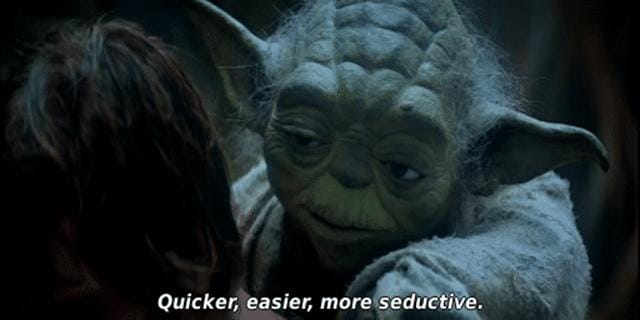
Musk stood out from most climate messaging by offering an idea that was – to quote Yoda describing the Dark Side in The Empire Strikes Back – quicker, easier; more seductive. Namely, that it was wealthy men buying luxury cars who would elevate civilization from backwards combustion.
It is easier to see in retrospect that this is a warmed-over White Man’s Burden – The White Collar Man’s Burden – of which type Musk would have been steeped, in the milieu of his Rolls-Royce chauffeured Apartheid South African upbringing, where F.W. de Klerk, the last white President of South Africa, might be invited over for dinner.
The White Man’s Burden and its “civilizing” rhetoric gave years of ideological cover to brutal colonial projects; his White Collar Man’s Burden did much the same for Musk. The fan jingoism he stoked succeeded for many years in denying and drowning out the evidence of Tesla’s (and SpaceX’s) endemic, systematic, bad-faith business dealings. Apologists still defended Musk in 2024, 2025 and even today: the warm glow of fellowship.
Not Too Dangerous To Exist
Nuclear power opponents argue, among other things, that however unlikely a meltdown may be, the consequences would be too severe for nuclear power plants to be allowed to be built.
ZEV credits, as they were administered, failed that meltdown test too. They funded the rise of a person determined to destroy the pluralistic, multi-ethnic, empathizing societies out of which those ZEV credits came. It’s Popper’s Paradox of Tolerance come to life.
Nuclear proponents are left to argue that thanks to better designs and practices, past disasters will never repeat. This is the position from which future ZEV mandate (and similar climate policy) supporters will have to argue. A hurdle for future advocates will be to show how their programs could not be gamed by a future Elon Musk.
Musk’s rise has been a catastrophic outcome for ZEV mandate policies (or rather their credit trading mechanisms) which had noble prosocial aims, delivered quantifiable pollution reductions, and have assisted the writer’s beloved hydrogen and fuel cell sector. [A forbidden love, in the eyes of some.]
Paraphrasing Santayana, if we don’t learn from the past we will be destined to repeat it. The next would-be Elon Musks are out there somewhere; one day or decade they will try to exploit prosocial policy themselves. I’m optimistic we will develop effective designs and guardrails, much as the nuclear industry has.
Still, when we consider ZEV mandates’ legacies, we need to include the very unlikely but very real, very large, very negative externalities caused by a terrible man who fooled enough people for a long enough time with the triumphalism of his White Collar Man’s Burden.
Enjoying energy commentary rooted in empathy? Make sure to subscribe here and smash that “like” butt— oh wait, wrong platform. 😊
[1] 2015 was also the year Elon Musk was caught gaming the California Air Resources Board’s ZEV credit system by building one (1) single battery swapping station for Tesla vehicles -- and then never opening it to Tesla owners. An exclusive invitee reported the manual process took 15 minutes. Credits had been assigned based on a 90-second automatic process that had been “demonstrated” underneath a stage in June 2013. Other examples are legion.
[2] https://www.jalopnik.com/elon-musk-tesla-self-driving-cars-anniversary-autopilot-1850432357/