Implausible Thanks to a PhD "Climate Crank"
I’d closed my office door by this point, which was a good thing, because I fairly shrieked, “are you telling me George W. Bush got into Harvard Business School on [obscene gerund] merit??”

Six and a half years ago, when I was working on BC’s electric vehicle infrastructure program (rebates to help apartments put chargers in their shared garages) a hostile caller rang my office phone to rant about electric cars. And global warming.
After 45 minutes of sometimes-shouting back-and-forth, we bonded over a shared respect for nuclear power. Before we hung up, he warmly invited me to have coffee with him the next time I was in Victoria. I was eager to take him up on it – but lost his phone number; one of my life’s medium regrets.
Anyone can be thankful for their friends, and everyone is. I need to give thanks, at least this once, to that (hopefully now-recanting) climate crank for pushing my buttons – and then proving to our mutual surprise how small bridges can make for big progress.
Background
I wish I could give an exact date for this phone call – it’d be easy to find in telecom records – but I remember it happening soon after an Indo-Canadian colleague had been harassed by a racist caller on account of his accent. We’d rallied around him as best we could.
So, my guard went up a little when I picked up the phone and an angry voice asked who they were speaking with. I introduced myself, and with steadily decreasing patience explained that yes, electric vehicles (EVs) emitted fewer greenhouse gases than combustion vehicles; yes, it took more energy and emissions to produce EVs, but that reduced emissions during driving quickly made up for that; and that yes, cobalt miners in Congo deserved the same kind of human rights we enjoy in Canada.
A kind talk radio host once (2018) gave me a half-hour – four segments – to field electric car questions, and I quickly learned that some callers just wanted to hear an EV advocate say, “I’m not morally superior to you, the gasoline-car driver”. These people were pre-emptively hostile because they assumed the worst: that EV advocates looked down on other drivers for their dirty, internal-combustion ways.
On the other end of the phone, John wasn’t mollified. He claimed purchase rebates weren’t financially effective – and was unmoved when I affirmed that it was important to support public transit and other solutions too. To make it extra clear I wasn’t the moralizing type, I resorted to the nuclear option of self-deprecation: the fact that cyclists hate EVs too, for entrenching auto-centric urban design (“carchitecture”) instead of returning our towns to the human scale. No luck.
An Onion of Arguments
John peeled the outer EV layer off his onion of arguments and turned the discussion to global warming and its [sigh] “non-existence”. When I lost my temper and demanded what credentials he had to make such a comprehensively disprovable claim he replied, as if revealing a winning poker hand, “I have a PhD in organic chemistry. How about you?”
I countered with my [mere] bachelor’s in chemical engineering. Not wanting to give him time to turn this into a credential-measuring contest, I pressed him on his knowledge of infrared spectroscopy. The technology tells us that every polyatomic (3-or-more atom) gas molecule happily absorbs infrared light and is therefore a greenhouse gas. There are some asterisks around this, but for the essay’s purposes they don’t matter.
Still no luck. I couldn’t trip him up: he was dead wrong about the observable reality of global warming, but his mind was still sharp on the chemistry side. I pushed forward, past a puzzling segue on refrigeration, driving him back to a statement that the upper atmosphere was cooling. This is accurate and consistent with climate models, but rather than wrestle through the technical explanation, I retorted that neither humans nor our major agricultural crops live five Mount Everests above sea level. We live near sea level, where temperatures have been observably rising.
John made the concession that I had some technical competency – I limply reciprocated – then peeled his onion again to complain that university standards were getting lowered to accommodate diversity efforts. I’d closed my office door by this point, which was a good thing, because I fairly shrieked, “are you telling me George W. Bush got into Harvard Business School on [obscene gerund] merit??”
After reciting my shopping list of elite failsons and faildaughters who’d pulled themselves up by their parents’ bootstraps, I offered that it was mathematically possible that some standards at some institutions might have been lowered irresponsibly in recent years – but that lowered standards have always existed for rich people’s idiot kids. I now include current Toyota Chairman Akio Toyoda (grandson of the founder) in this category.
Ever trying to make lemonade from lemons, I conceded that John surely got his PhD on merit, but he must have encountered some mid-wit rich kids on campus. For the purposes of the (now half-hour?) conversation, he could grudgingly live with that, and I could grudgingly live with him criticizing the risk of lower standards if he made sure to include legacy admissions too.
CANDU Non-Missile, Non-Crisis
John then reached the nuclear energy layer of his onion, saying that while he’d credit me for having some competence of my own, I worked for an environmental non-profit, that these had broadly impeded progress, and that I probably opposed nuclear energy.
That was unexpected enough that for a moment I forgot to be angry. I perfunctorily said I supported nuclear energy and thought it was a tragedy that early environmentalists opposed it.
Then it was his turn to forget to be angry. I filled the silence by commenting that while wind and solar far overshadow it now, for a few decades nuclear was the only zero-emission alternative to hydroelectricity, which can only be built in some places. Every cancelled nuclear plant meant coal or natural gas plants got built instead, with all their decades of avoidable emissions (and health consequences and premature deaths) in tow. Nuclear has also proven to be extremely safe. Anti-nuclear groups can still argue they chose the lesser of two evils; it’d just be nice to hear them acknowledge that the lesser evil they chose, caused suffering of its own.
The phone call went from cantankerous to convivial – a remarkable personal experience. Looking back I think of an anecdote about an American businessman visiting Cuba who suddenly built strong rapport with Fidel Castro over the “sport” of bowling. [Probably in this book, which described a pen-and-paper Customer Relationship Management system a decade before Salesforce was founded.]
Maybe John’s love of nuclear was the core of his onion of arguments, because he went from grudging to gracious, and allowed that for all our catalogue of disagreements, I had a good head on my shoulders. I reciprocated that a person couldn’t have a doctorate in chemistry without being smart, even if I very strongly disagreed with them on numerous issues. Checking the time, and wanting to end on this high note, I commented that I needed to be getting back to work. He respected that – then invited me for coffee (!) the next time I was in Victoria and gave me his number.
After hanging up I fairly leapt out of the office, ecstatically describing the call to colleagues, who caught my enthusiasm. They were excited for me, I was excited for me – and that made it all the more agonizing not to be able to find the number on my desk a couple days later. If I’d only spent that first minute logging the number into my smartphone…
As I said before, one of my life’s medium regrets.
Lessons
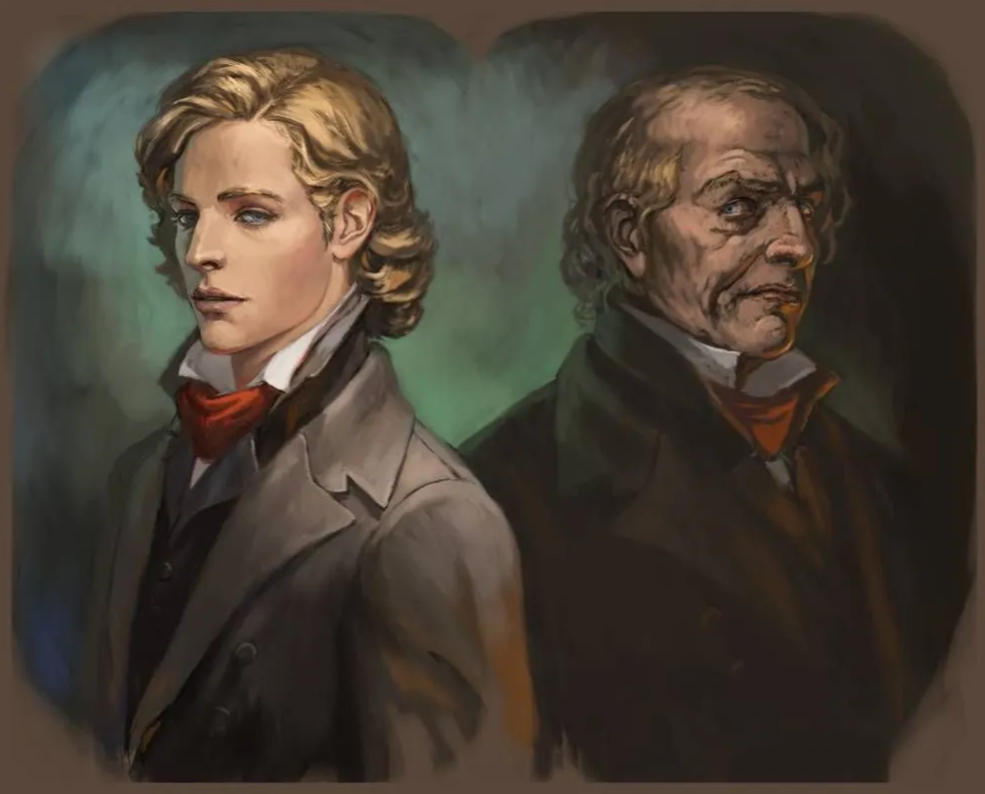
Maybe owing to the emotional rollercoaster, the call stuck with me for the rest of the day. It was great to think he’d underestimated me because of he was blinded by a stereotype – but galling to realize I’d underestimated him with my own. I’d pictured him as a scientifically illiterate blue-collar high school graduate worked into a perma-frenzy by Fox News and their ilk. Me having applied my own stereotype meant that while I was very different from him, I wasn’t completely different from him. If I was Dorian Gray, he was the unflattering Picture of Dorian Gray glaring back at me.
The call turned out well, but if he’d admitted to “only” having a high school diploma, I might have opened a thesaurus of insults. Living mostly caffeine-free is calming, but he still got under my skin too easily. I still had a weakness to work on.
Even worse, the call taught me that if I got angry enough, I might sort people into a higher status did-post-secondary-education group and a lower status “only”-did-high-school group. That kind of elitism is poisonous to progress, even it’s suppressed into the subconscious. I would later find Michael Sandel’s book The Tyranny of Merit, which now sits on the top shelf of the bookcase among my most prized tomes.
On the positive side, talking with John gave me the experiential confirmation – not just the intellectual instinct but the lived experience – that if I had the mental endurance to peel someone back to the core of their argumentation, there could be points of common ground to build from. Maybe not with everyone, but with more people than I’d expect. We might not build much on that common ground, and I wouldn’t immolate my evidence-based views, but maybe the hopeless cases were fewer and farther between. But I’d only ever find out if I worked on that mental endurance.
And that lesson is still worth thanking him for.